




Floating floors are one of the most popular flooring options because they are relatively easy to install, durable, and come in various styles and finishes.
Floating floors are rigid flooring that rests on the floor and does not require nails, glue, or other adhesives to install. Instead, an interlocking mechanism creates a seamless surface and keeps them in place.
Benefits of Floating Floor
Choosing a floating floor for your home can provide many benefits, such as the following.
- They are versatile and can be installed on any subfloor, or over most existing floors such as concrete, wood, or ceramic.
- They are durable and resistant to scratches, stains, and moisture.
- They are available in a variety of styles, colours and materials, such as vinyl, engineered wood, and laminate.
- They mimic the look of timber flooring but are more affordable than solid timber floors.
- They are quicker to install compared to other types of flooring.
Types of Floating Floors
Laminate Flooring
Engineered timber flooring is an ideal choice for modern homeowners for several reasons:
Laminate flooring consists of multiple layers fused using high heat and intense pressure.
The backing layer, typically made of melamine, contributes to the stability of the product and resists moisture.
The core layer provides structural stability to flooring. It is made of either high-density or medium-density fibre board, essentially wood fibres that are compressed together with resin.
The core layer is topped with a decorative photographic layer that imitates the look of wood or stone. A transparent protective layer imparts properties such as moisture and scratch resistance, ensuring the durability of the flooring.
Among the different floating floor types, laminates are generally more affordable. However, they are generally less water-resistant than hybrid flooring. But you can find high-quality laminate flooring that has good water-resistant properties.
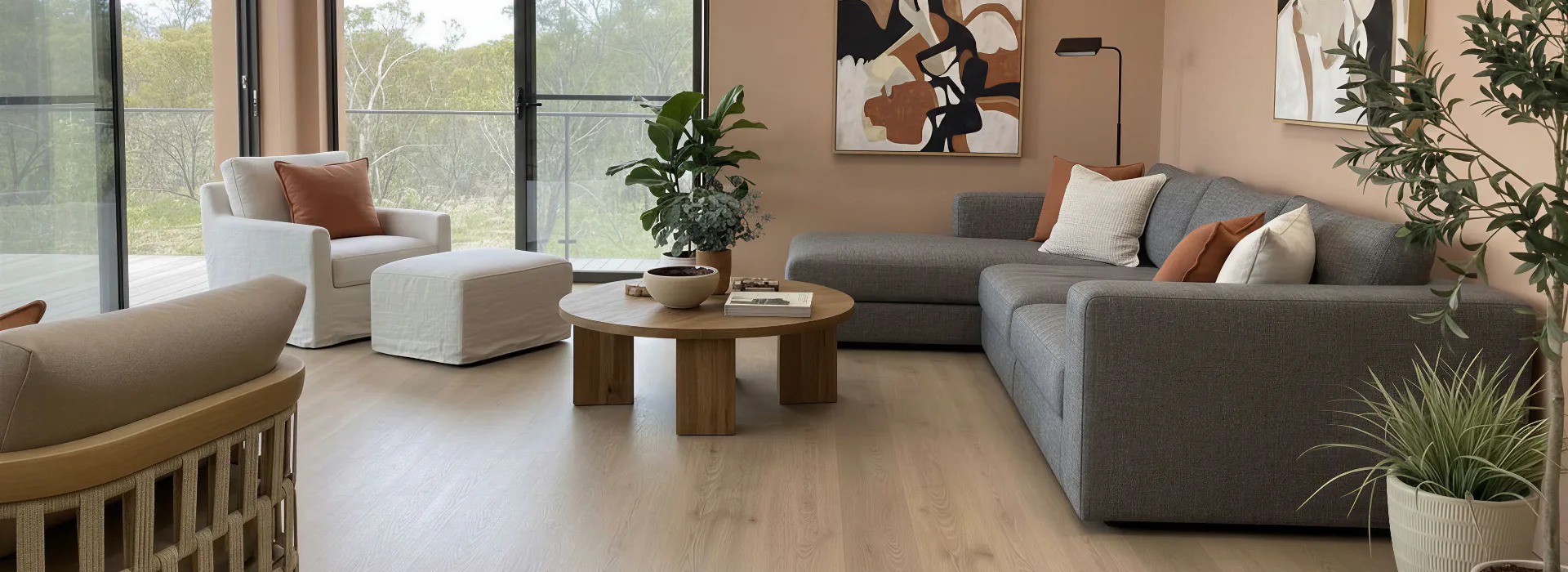
Hybrid Flooring, Built Tough
Timber or stone looks with water-resistant, durable performance.
Hybrid Flooring
Like laminate, hybrid flooring is a rigid floating floor product with a multi-layered structure consisting of a protective layer, decorative layer, core, and backing.
The main difference between the two is that the core of hybrid flooring is made of PVC (polyvinyl chloride)-stone blend or PVC-wood blend.
Hybrid flooring is more expensive than laminate flooring but generally more water-resistant.
Engineered Timber
Engineered timber flooring is made from a thin layer of natural hardwood glued to a plywood or high-density fibreboard (HDF) substrate. It may also have an added protective coating to help resist moisture, wear, or UV damage.
Engineered timber flooring is generally more durable than laminate and hybrid flooring. Because the top layer is made with real timber, it has the most natural look among other types of floating flooring.
However, they can be more susceptible to scratches, dents, and moisture damage than other floating floors. That said, many engineered timber flooring nowadays have protective finishes to address these issues.
Engineered timber flooring is also more sustainable than solid timber flooring because it uses less hardwood to achieve the same effect. The core layer is typically made with fast-growing trees that can be quickly replenished. They are also more stable and less prone to expansion and contraction than solid wood floors.
Installation
To install a floating floor, you will need some basic tools and materials, such as a tape measure, a level, a saw, a hammer, a utility knife, spacers, flooring planks or tiles, and transition strips.
The installation process may vary depending on the type of floating floor you choose, but it generally involves these steps:
First, you need to measure the room and calculate how much flooring you need. It’s always a good idea to add 10% extra for waste and cuts.
Next, you need to prepare the subfloor by cleaning it and ensuring it is level and dry. Any bumps or dips in the subfloor can cause problems with the installation and affect the final result.
Install an appropriate underlay if needed. Hybrid flooring doesn’t require an underlay, but laminate and engineered flooring do. Always check with the manufacturer’s recommendation about the type of underlay.
Once the subfloor is ready, you can start laying the flooring planks or tiles from one corner of the room and work your way across. Use spacers to leave a gap between the flooring and the wall. This gap allows for the expansion and contraction of the flooring material.
Follow the manufacturer’s instructions to lock or snap the planks or tiles together. You can use a saw or a utility knife to cut the last plank or tile to fit the remaining space. Once the flooring is installed, remove the spacers and install the baseboards or moulding to cover the gap.
Finally, install transition strips between different types of flooring or at doorways to create a smooth transition. This will help prevent tripping hazards and make the room look more finished.
How to Choose Floating Flooring
Here are some tips for choosing floating flooring for your home.
Consider the style and colour
The style and colour of your floating floor can significantly impact your home’s overall look and feel. Choose a style and colour that matches your existing furniture, walls, and decor or creates a contrast or a focal point.
Also, consider the size and shape of your room and how the flooring will affect it. For example, lighter colours can make a small space look bigger, while darker colours can add warmth and cosiness.
Consider the cost and installation
The cost and installation of your floating floor depend mainly on the type of material, the size of your room, and the project’s complexity. Compare different options and get quotes from different suppliers and installers before deciding. Factor in any additional costs such as baseboards, moulding, transition strips, tools, or labour.
Generally speaking, laminate floating floors are the most affordable option, followed by hybrid floating floors and then timber floating floors.
Consider its suitability for your room and lifestyle
Consider the function and location of your room and how it will affect your flooring choice. For example, you may want a more durable and scratch-resistant option if you have pets or kids. If you are upgrading your kitchen or dining room floors, choose flooring with excellent water resistance.
Check the warranty of your floating floor before buying
A good warranty can give you peace of mind and protect you from any defects or damages that may occur during or after installation.
In conclusion, floating floors are popular for homeowners who want to update their flooring without breaking the bank. They are relatively easy to install, require minimal maintenance, and come in a variety of styles and materials to suit any taste. Whether you’re looking to update your home’s aesthetic or simply want a more durable and long-lasting flooring option, a floating floor may be the perfect solution for you.
Join our 30-day Decluttering Challenge

Frequently Asked Questions
A floating floor is a type of flooring installation method where the planks or tiles are not attached to the subfloor. Instead, they are laid on top and held in place by an interlocking system that allows them to “float” above the subfloor.
Floating floors are a great option for many homeowners. They offer an easy installation process and can be installed over most existing flooring, saving time and money. Floating floors also provide superior sound insulation, making them ideal for areas with high foot traffic or where noise is an issue. Additionally, floating floors come in a variety of materials such as laminate, engineered timber & bamboo, and hybrid flooring, so you can find the perfect one to match your needs. With proper care and maintenance, they will last for years to come!
Floating floors are a convenient and popular choice, but they can develop issues if not installed correctly. One of the most common problems is buckling, which occurs when there are inadequate expansion gaps around the perimeter or in transition areas. This can cause the planks to press against one another, leading to lifting. Additionally, the flooring may become squeaky or unstable underfoot. These issues can be avoided by ensuring proper subfloor preparation and careful installation of the floating floor.
Underlay is an essential part of most floating floor installations because it reduces noise, adds insulation, and helps create a stable surface. The type of underlay depends on the flooring material and the subfloor. Engineered timber and laminate floors require a foam or rubber underlay to cushion the boards and ensure proper performance. If you’re installing over concrete or in areas where moisture protection is needed, choose an underlay with a vapour barrier or install a separate moisture barrier before laying the underlay. Hybrid flooring, however, is manufactured with its own built-in backing and does not require a separate underlay. Always follow the manufacturer’s instructions to ensure the right underlay is used for your specific floor type and installation conditions.
The installation time of a floating floor depends on the type of material, the size of the room, and the project’s complexity. Generally speaking, installing a floating floor can take a few hours to a few days.
The cleaning and maintenance of a floating floor depend on the type of material and the manufacturer’s instructions. Generally, you should sweep or vacuum your floating floor regularly and use a damp mop or cloth to wipe away any spills or stains. You should also avoid using harsh chemicals, abrasive or steam cleaners on your floating floor.
A floating floor’s lifespan depends on the material type, the product’s quality, and the flooring’s usage and care. Generally speaking, a floating floor can last anywhere from 10 to 30 years or more.