




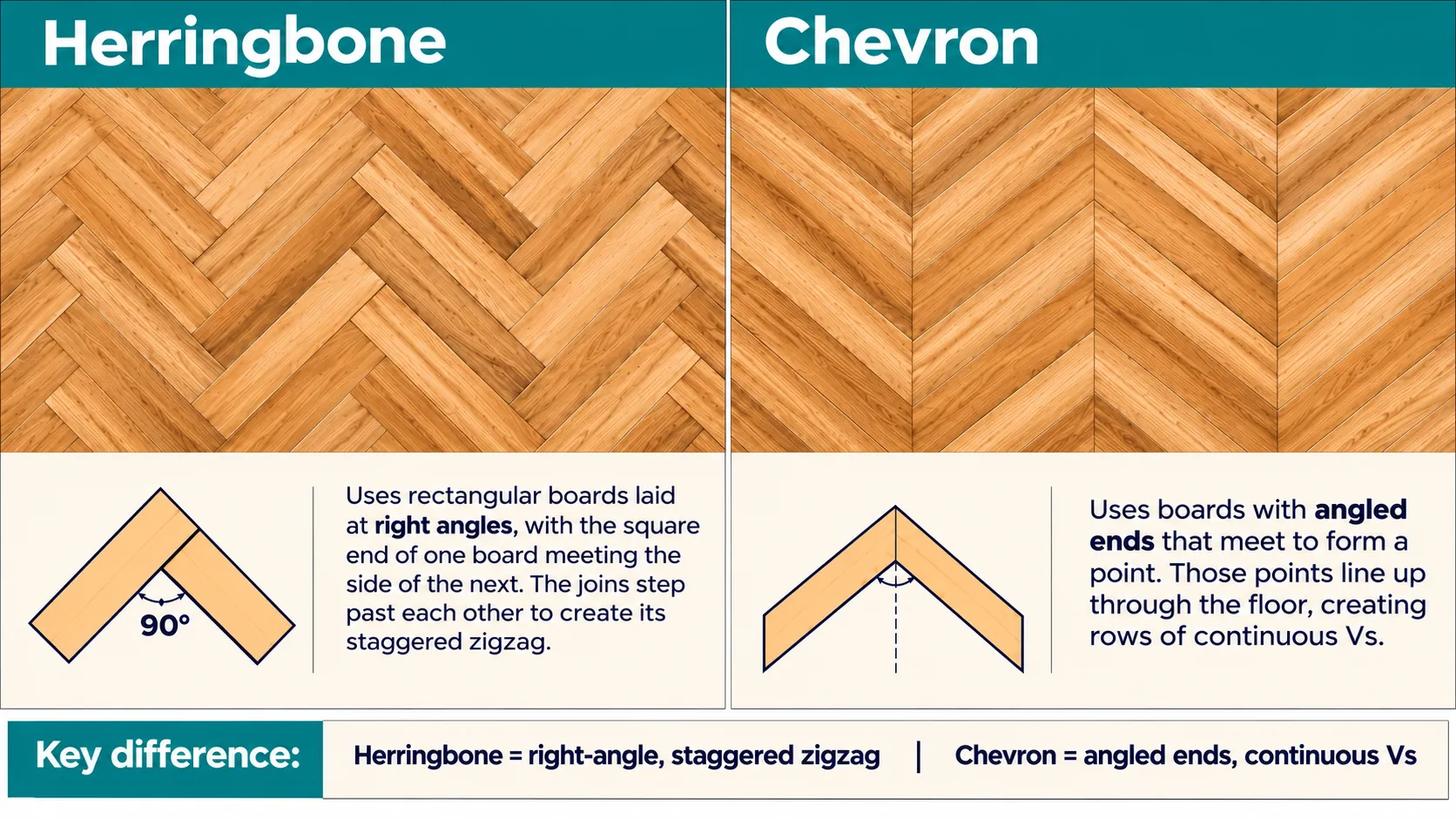
Herringbone and chevron both bring a zigzag pattern to your floor, but the difference is in the joins. Herringbone has a staggered pattern, with the end of one board meeting the side of another, while chevron forms a continuous V where the angled ends meet.
If you enjoy a floor with plenty of texture, herringbone is a good place to start. If you prefer a more defined pattern that draws your eye along the room, take a closer look at chevron. The colour, grain and size of the boards will shape the result just as much as the pattern itself.
What is the difference between herringbone and chevron?
Herringbone uses rectangular boards laid at right angles, with the square end of one board meeting the side of the next. The joins step past each other to create its staggered zigzag.
Chevron traditionally uses boards with angled ends that meet to form a point. Those points line up through the floor, creating rows of continuous Vs.
Some flooring products create the pattern within a larger panel, so the boards you buy may look different from the individual pieces in a traditional parquet floor. Check a sample of the finished layout as well as a single board before choosing.
You can explore more ideas on our herringbone and chevron flooring page.
Join our 30-day Decluttering Challenge

How each pattern looks in a room
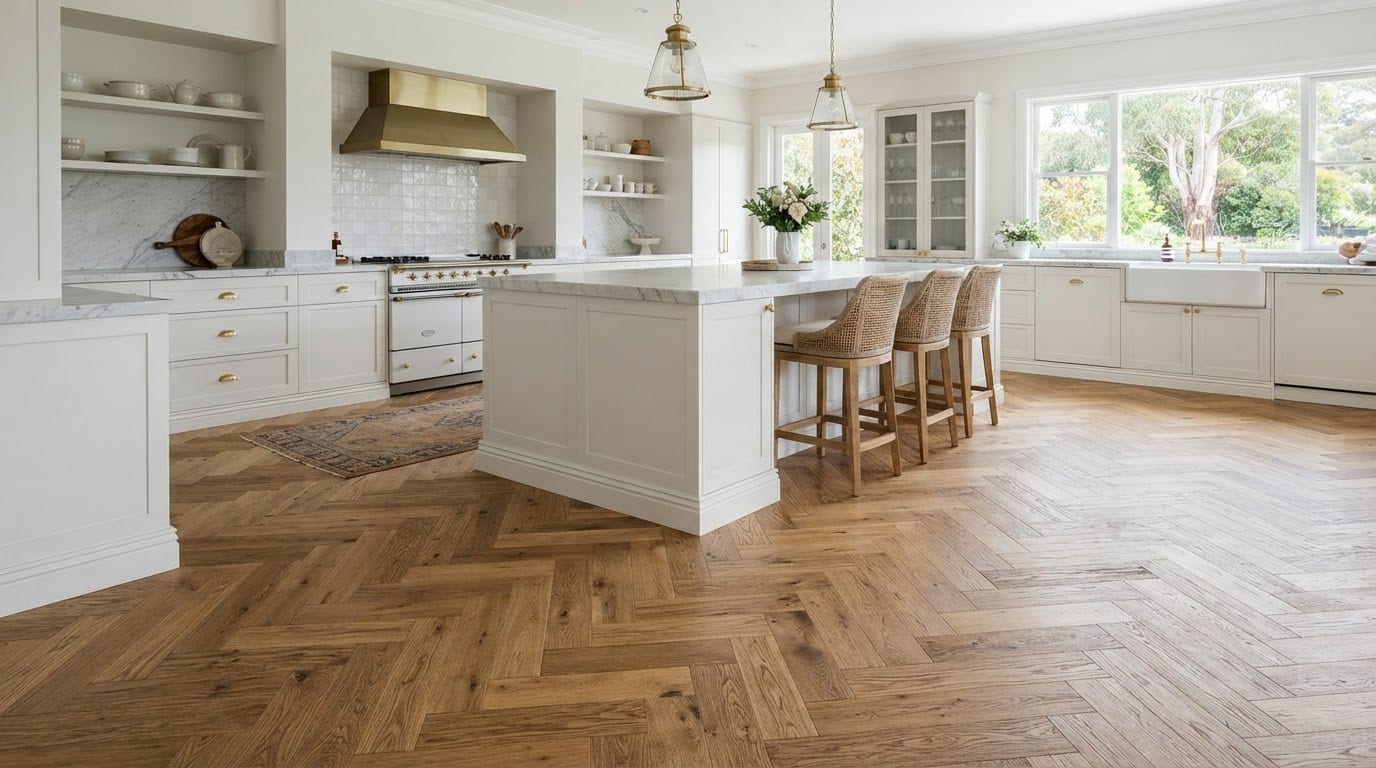
Herringbone gives your eye a little more to follow, as the boards change direction and the joins step past one another. In a natural oak tone with subtle grain, it can add detail without becoming the first thing you notice. Choose stronger colour variation between boards and the same pattern becomes a much bigger feature.
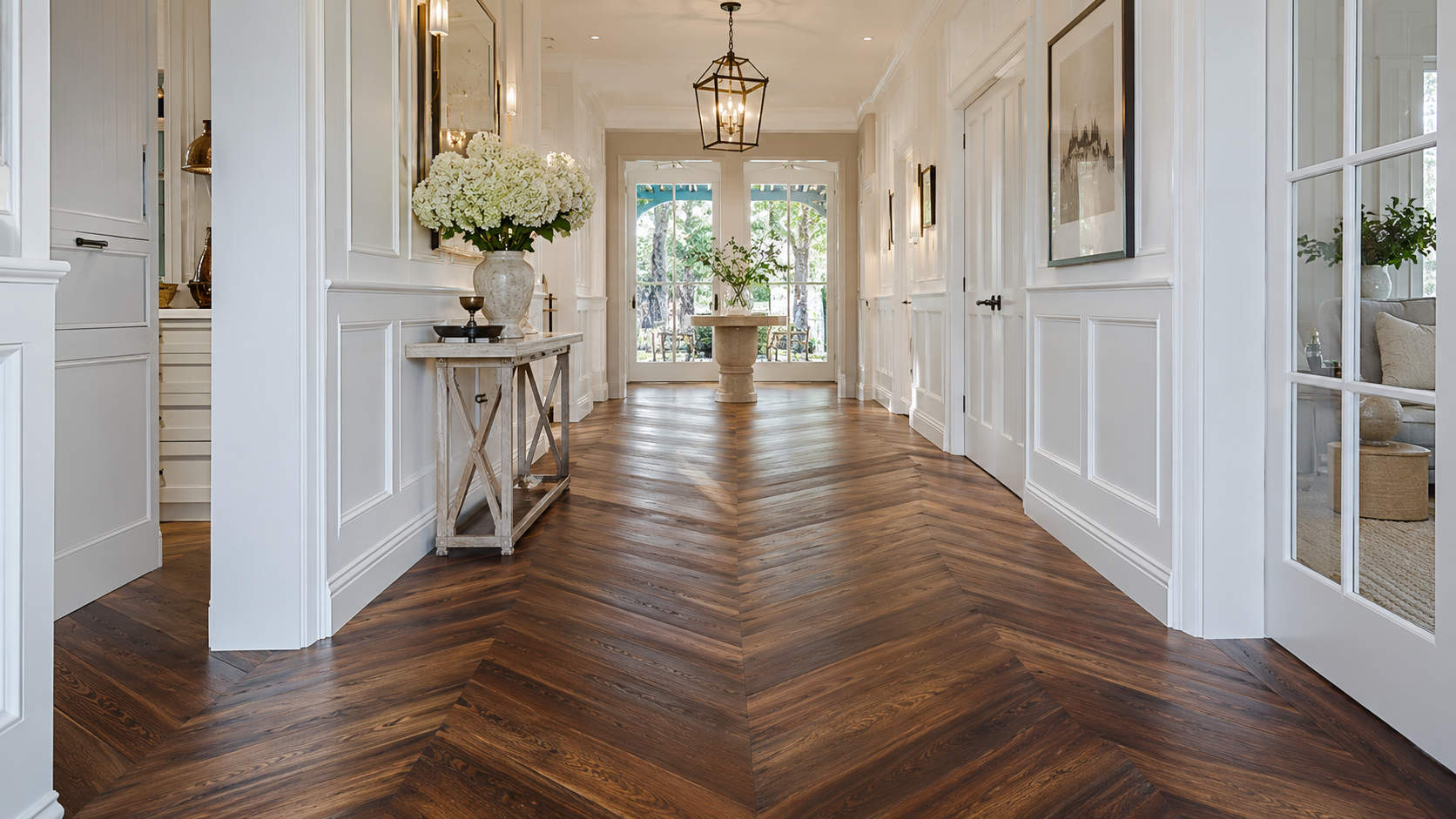
Chevron has a clearer line through the centre of each row of Vs. You might run that line towards a garden view or along a hallway, although the best direction depends on the room and what you see as you enter it.
Neither pattern belongs to just one style of home. Pale oak herringbone can sit comfortably with the white joinery and linen textures of a coastal interior, while a darker chevron can give a simple modern room more character. For a traditional home, try a mid-toned oak alongside the existing doors, skirting boards and other timber finishes.
If you are planning a Hamptons style kitchen, our guide to the best flooring for a Hamptons style kitchen can help you compare materials and finishes.
Choosing the material as well as the pattern
Herringbone and chevron describe the design, rather than what the floor is made from. You can find patterned flooring in engineered timber and selected timber-look products, but not every range offers both designs.
Engineered timber has a real timber surface, with natural differences in grain and colour. It is worth considering if those variations are part of what you love about a timber floor.
Laminate offers a printed timber appearance with a wear-resistant surface, and herringbone options are available. Hybrid and vinyl plank also offer patterned options in selected ranges, giving you other ways to achieve the pattern you like.
Choose the floor for the room first, then compare the patterns available. A kitchen needs a product suitable for kitchen use, while in a living area you might give more weight to its feel underfoot or how it works with the adjoining rooms. Your local Carpet One store can help you compare the options available for your project.
Installation varies too. Some products click together as a floating floor, while others are glued down, so a patterned vinyl floor should not automatically be treated as a floating floor.
Does herringbone or chevron cost more?
Both patterns can involve more setting out and cutting than a straight plank layout, but there is no reliable rule that chevron will always cost more than herringbone. The product, installation system, room shape and preparation all affect the finished price. A floor made from individual pieces is a different installation job from one with the pattern built into larger boards. Corners, doorways and the way the design continues between rooms can also change the amount of work and material needed.
Your local Carpet One store can talk you through the Total Installed Price for the options you like and explain what is included, from preparing the floor underneath to finishing the edges. That makes it easier to compare the full job rather than the price of the boards alone.
Will a patterned floor work in a small room?
A small room does not rule out either pattern. Start by looking at how much detail is already in the space and whether you want the floor to add to it or provide a quieter background.
If you have patterned curtains, open shelves and plenty of furniture, boards with subtle grain and similar tones may be easier to live with than a high-contrast design. In a simpler room, a more noticeable pattern can have room to stand out.
Board size matters, but larger is not automatically better. Look at a layout showing several repeats of the pattern and consider how much floor will remain visible once your furniture is in place. That will tell you more than holding up one sample board.
Is herringbone a passing trend?
Herringbone is an established parquetry pattern, rather than a new flooring idea, but that does not mean every version will suit every home. Colour and scale make a difference to how comfortable you will feel with it over time. If you are concerned about choosing something too fashionable, compare a subtle natural oak with a more dramatic finish. Think about which you would enjoy alongside the furniture and colours you already own, rather than choosing from a styled photograph alone.
Compare the patterns with your local Carpet One store
Bring along a room photo or floor plan and a few pictures of floors you like. Your local Carpet One team can help you compare suitable products, talk through the layout and explain what is involved in installation.
Find your local store to ask about herringbone and chevron options, or enquire about Showroom to You if you would like to compare samples at home.